

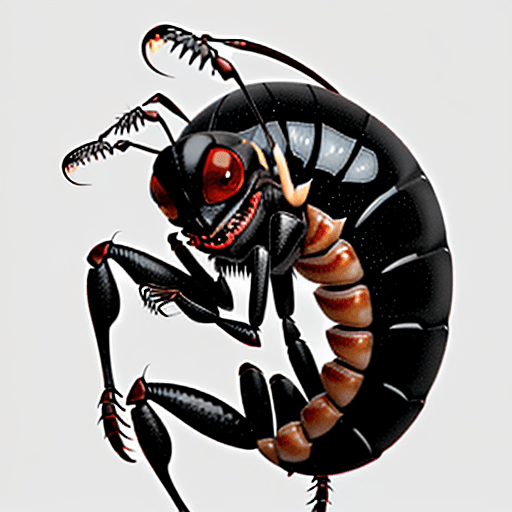

Maybe because AI was trained on human images, it really benefits from noses. If you don’t have a species with a nose, then you get a lot of head scratch pictures along the lines of “why did you do that?” If, on the other hand, if you let it have a nose, facial features tend to resolve a lot more quickly. Notice the prominent kitten noses on two of these buggy monsters.
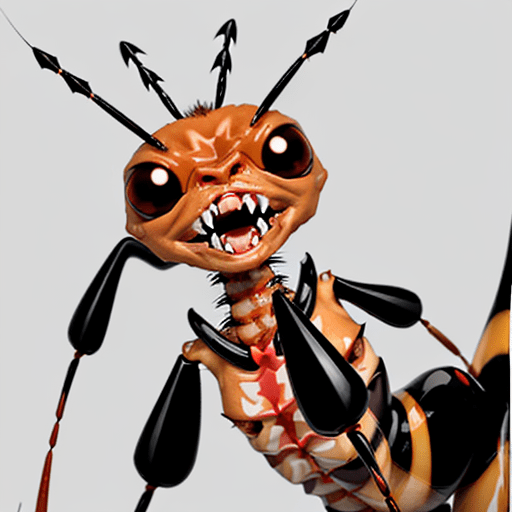
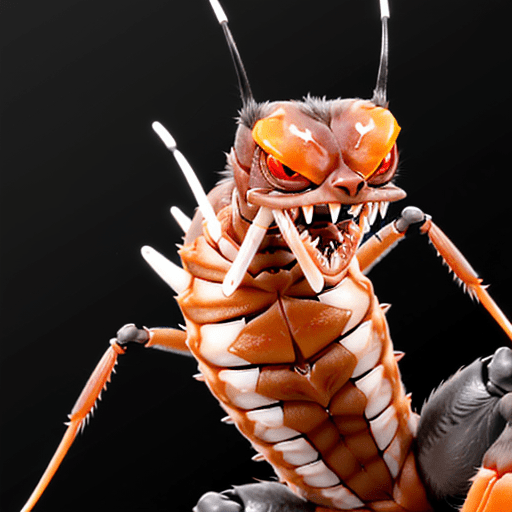

There’s another feature that I hadn’t realized going into this: Cuter features make a monster less monstrous. We humans are geared towards familiar facial structures, and when we see things that are misshapen or gross, then we are revulsed. Even though you can see the teeth on poodles more often than not, because they’re kinda cute with their damp nose above those teeth, they’re not so hideous. So a little nose even forgives sharp teeth on a fishy jaw.

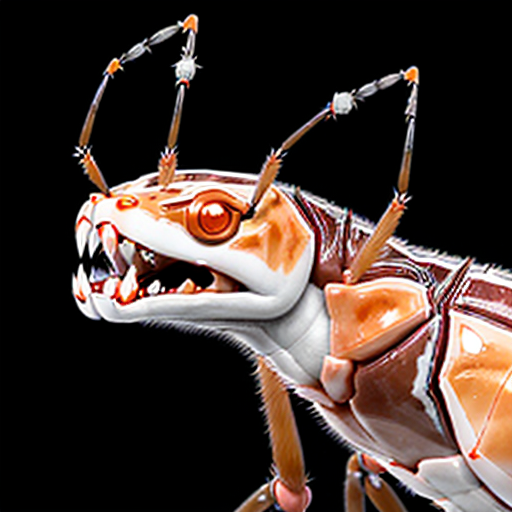

Getting the eyes right was the last step. Again, you ask AI for one species feature, you have to put up with another one. I asked for a payara jaw, I got fish eyes. It got the color right, but it more often than not selected for bulging circular eyes, not the hooded snake-like eye I had conceived of. I added some negative prompts for fish eyes, and, after a little clean up of an iffy bug leg, I got:

There’s some subtle details here that I think actually tie it together well. Flonk’s underside looks like a moth; its lightly fluffy and banded. His carapace is a lot more amber and shiny than a gross bug would be; yes it is basically a german cockroach’s shiny amber back, but.. I don’t know a positive spin on that to prove it looks nice, but it looks nice. Even though the face very much is not cute, the original is not cute either, but it has some charm to it.

Next step is to do the body, but once I move the antennae to Flonk’s nose, I think the head is at a pretty good state to start iterating with.




 The Also-Rans
Leave a reply to When you’re a monster, fight like one by backstabbing your oppressors! – The Also-Rans Cancel reply